The best 3D printer for RC parts depends on your needs. The Creality Ender 3 is best for beginners on a budget who want to learn while making basic RC components. The FLASHFORGE Adventurer 5M excels at rapid prototyping with its 600mm/s speed and auto-leveling for quick part iterations. For reliable all-around performance, the ELEGOO Neptune 3 Pro stands out with its direct drive extruder that handles flexible TPU materials perfectly for RC tires and shock absorbers.
RC hobbyists need printers that can handle various materials and produce accurate parts consistently. The right printer will save you money on replacement parts while letting you customize and upgrade your vehicles exactly how you want them.
Quick Comparison Table
| Product | Build Volume | Print Speed | Auto Leveling | Extruder Type | Assembly Time |
|---|---|---|---|---|---|
| Creality Ender 3 | 8.66×8.66×9.84″ | Standard | No | Bowden | 2 hours |
| FLASHFORGE Adventurer 5M | 8.66×8.66×8.66″ | 600mm/s | Yes | Direct (280°C) | Ready to use |
| ELEGOO Neptune 3 Pro | 8.85×8.85×11″ | Standard | Yes (36-point) | Direct Drive | Minutes |
| Creality Ender 3 V3 SE | 8.66×8.66×9.84″ | 250mm/s | Yes (CR Touch) | Sprite Direct | 20 minutes |
| FLASHFORGE AD5X | 8.66×8.66×8.66″ | 600mm/s | Yes | Direct (300°C) | Ready to use |
| TINA2 Plus V2 | Compact | 250mm/s | Yes | Standard | Ready to use |
best 3d printer for rc parts
1. Official Creality Ender 3 – Budget-Friendly Learning Platform
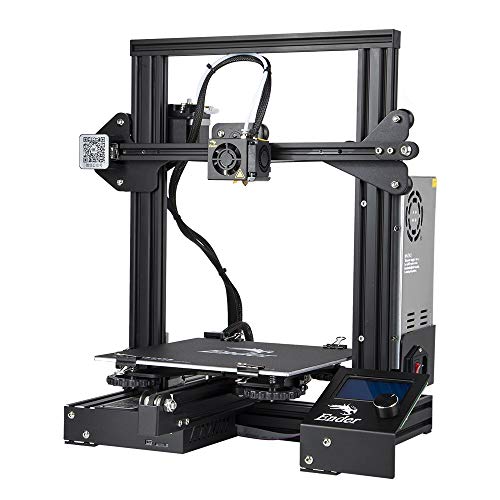
Best for: Beginners who want to learn 3D printing fundamentals while making basic RC parts on a tight budget.
Key Features:
| Feature | Details |
| Build Volume | 8.66×8.66×9.84 inches |
| Resume Function | Power outage protection |
| Extruder | Upgraded bowden system |
| Bed Heating | 100°C in 5 minutes |
| Assembly | 2 hours required |
The Creality Ender 3 is the best entry-level printer for RC hobbyists who want to learn while saving money. It’s a proven platform with massive community support.
The upgraded extruder reduces clogging during longer prints of RC body parts or chassis components. V-shape POM wheels keep the printer running quietly and smoothly.
You’ll need about two hours to assemble it, which teaches you how the printer works. The resume printing function saves your projects if power cuts out mid-print.
The heated bed reaches 100°C quickly for good adhesion with ABS and PETG materials. It only prints from SD card or computer connection, not from phones.
This printer gives you hands-on experience with 3D printing mechanics while producing functional RC parts at an unbeatable price point.
Pros:
- Extremely affordable entry point
- Huge online community support
- Resume printing after power loss
- Teaches printer fundamentals
Cons:
- Requires 2-hour assembly
- No auto-leveling feature
2. FLASHFORGE Adventurer 5M – Speed Champion for Production

Best for: RC racers who need fast turnaround times for replacement parts and rapid prototyping of custom components.
Key Features:
| Feature | Details |
| Print Speed | 600mm/s maximum travel |
| Acceleration | 20,000mm/s² CoreXY |
| Nozzle Change | 3-second quick swap |
| Heat-Up Time | 35 seconds to 200°C |
| Auto Leveling | One-click automatic |
The FLASHFORGE Adventurer 5M is the best high-speed printer for RC enthusiasts who need parts fast. Its 600mm/s speed cuts production time dramatically.
The CoreXY structure with all-metal construction delivers precision even at extreme speeds. You can swap nozzles in just three seconds for different detail levels.
One-click auto-leveling eliminates setup time so you can start printing immediately. The 280°C direct extruder handles engineering-grade materials for strong RC components.
Remote monitoring through the Flash Maker app lets you check prints from the track or workshop. The dual-fan system ensures quality even during rapid printing.
This printer excels at batch production of identical parts or quick iterations when designing custom RC upgrades.
Pros:
- 12X faster than standard printers
- 3-second nozzle changes
- Mobile app remote monitoring
- Ready to print immediately
Cons:
- Smaller build volume
- Higher price point
3. ELEGOO Neptune 3 Pro – Flexible Material Specialist

Best for: RC builders who need to print flexible TPU parts like tires, bumpers, and shock absorbers alongside rigid components.
Key Features:
| Feature | Details |
| Extruder Type | Dual-gear direct drive |
| Build Volume | 8.85×8.85×11 inches |
| Auto Leveling | 36-point precision |
| Noise Level | 47dB quiet operation |
| Z-Axis | Dual lead screws |
The ELEGOO Neptune 3 Pro is the best all-around printer for RC parts requiring material versatility. Its direct drive extruder excels with flexible filaments.
The dual-gear system with 3:1 ratio provides consistent feeding for TPU, PETG, PLA, and ABS. SUS303 stainless steel construction ensures long-term reliability.
36-point auto-leveling creates perfect first layers every time, critical for parts that need precise dimensions. The dual Z-axis with dual motors eliminates wobble on tall prints.
Filament runout sensor and power-loss resume protect complex prints from failure. The upgraded nozzle system with titanium throat tube prevents clogs during extended jobs.
This printer balances ease of use with professional features, making it ideal for serious RC hobbyists.
Pros:
- Excellent flexible filament handling
- 36-point bed leveling
- Very quiet at 47dB
- Stable dual Z-axis
Cons:
- Standard print speeds
- Mid-range price
4. Creality Ender 3 V3 SE – Fast Setup Speed Upgrade
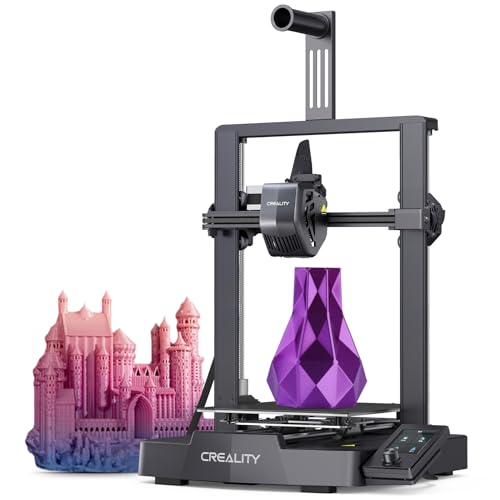
Best for: Intermediate users who want faster printing speeds than the original Ender 3 with modern conveniences like auto-leveling.
Key Features:
| Feature | Details |
| Print Speed | 250mm/s maximum |
| Acceleration | 2,500mm/s² capability |
| Extruder | Sprite direct drive |
| Setup Time | 20 minutes total |
| Auto Leveling | CR Touch system |
The Creality Ender 3 V3 SE is the best upgraded Ender for RC builders who want faster results without breaking the bank. It prints at 250mm/s with reliable quality.
The Sprite direct extruder handles PLA, PETG, and TPU materials with proven reliability from over 500,000 units shipped. Auto filament loading makes material changes effortless.
CR Touch auto-leveling eliminates manual bed adjustment frustration. You can go from box to printing in just 20 minutes including assembly and setup.
Dual Z-axis with 8mm steel linear shafts provides rock-solid stability for accurate RC parts. The color screen interface makes operation intuitive for beginners.
This printer delivers modern features and speed at a price point that makes sense for hobbyists.
Pros:
- 250mm/s fast printing
- Auto filament loading
- 20-minute quick setup
- Proven Sprite extruder
Cons:
- Not as fast as premium models
- Standard build volume
5. FLASHFORGE AD5X – Multi-Color Design Expert

Best for: Advanced RC builders who want multi-color parts or need professional-grade precision for complex custom designs.
Key Features:
| Feature | Details |
| Colors | 4 simultaneous colors |
| Print Speed | 600mm/s CoreXY |
| Max Temperature | 300°C extruder |
| Nozzle Options | 0.25mm to 0.8mm |
| Cooling | Dual-channel fan |
The FLASHFORGE AD5X is the best premium printer for RC enthusiasts who want eye-catching multi-color designs. It prints up to four colors simultaneously.
The 300°C direct-drive extruder handles high-performance engineering materials for demanding RC applications. CoreXY structure delivers 600mm/s speed without sacrificing precision.
Interchangeable nozzles from 0.25mm to 0.8mm let you switch between ultra-fine details and rapid large part production. Vibration compensation ensures quality at all speeds.
One-click auto-leveling makes setup effortless despite the advanced capabilities. The dual-channel cooling fan maintains quality on intricate multi-color prints.
This printer is ideal for competitive RC racers who want custom team colors or builders creating show-quality display models.
Pros:
- 4-color simultaneous printing
- 300°C high-temp capability
- Multiple nozzle sizes
- Professional print quality
Cons:
- Premium price tag
- Overkill for basic parts
6. TINA2 Plus V2 – Compact WiFi Convenience
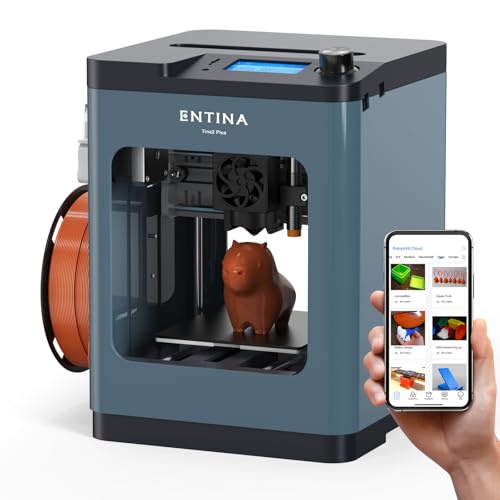
Best for: Casual RC hobbyists with limited workshop space who want WiFi printing convenience for small replacement parts.
Key Features:
| Feature | Details |
| Size | Compact mini design |
| Print Speed | 250mm/s capability |
| Connectivity | WiFi with app |
| Platform | Spring steel removable |
| Assembly | Fully assembled |
The TINA2 Plus V2 is the best compact printer for RC hobbyists with limited space who need basic parts quickly. It’s ready to print right out of the box.
WiFi connectivity with the Poloprint Cloud app makes printing convenient from your phone. The 250mm/s speed handles small RC parts efficiently.
Spring steel platform makes part removal easy without damaging prints. Auto-leveling with dual Z-axis ensures consistent quality despite the compact size.
Fully open-source design works with Windows, Mac, Linux, and Chromebook. The 10,000 rpm cooling fan maintains quality on detailed small components.
This printer fits on any workbench while delivering reliable performance for smaller RC parts and accessories.
Pros:
- WiFi printing convenience
- Fully assembled ready
- Space-saving compact design
- Beginner-friendly interface
Cons:
- Limited build volume
- Not for large parts
How to Choose best 3d printer for rc parts
Build Volume Requirements
Consider the largest RC parts you’ll need to print regularly. Most standard printers offer around 8-9 inches per side, which handles most car and truck parts.
Larger vehicles like monster trucks or scale crawlers may need bigger build volumes. Smaller parts like gears and brackets work fine on compact printers, saving desk space.
Material Compatibility
RC parts require different materials for different applications. Rigid parts like chassis plates need PLA or PETG, while flexible parts like bumpers need TPU capability.
Direct drive extruders handle flexible filaments better than bowden systems. Check the maximum hotend temperature if you plan to print high-strength materials like nylon or polycarbonate.
Print Speed and Reliability
Faster printers reduce waiting time when you need replacement parts quickly. Speeds of 250mm/s or higher significantly cut production time for urgent repairs.
Reliability matters more than raw speed for most hobbyists. Features like auto-leveling, filament sensors, and power-loss resume prevent failed prints and wasted material.
Ease of Use and Setup
Beginners benefit from pre-assembled printers with auto-leveling features. Assembly teaches you printer mechanics but delays your first print by hours.
Auto-leveling eliminates the most frustrating part of 3D printing for new users. WiFi connectivity and mobile apps add convenience but aren’t essential for quality results.
Budget and Feature Balance
Entry-level printers around $170-220 deliver solid performance for basic RC parts. Mid-range options at $250 add speed and convenience features worth the investment.
Premium printers above $400 make sense for advanced users who need multi-color printing or professional precision. Most RC hobbyists get excellent value in the $200-300 range.
Frequently Asked Questions
What filament material is best for RC car parts?
PLA works great for non-structural parts and is easiest to print. PETG offers better durability and heat resistance for chassis components, while TPU is essential for flexible parts like bumpers and tires.
Do I need a direct drive extruder for RC parts?
Direct drive extruders are highly recommended if you plan to print flexible TPU materials for tires and shock components. They also provide more consistent extrusion for detailed parts compared to bowden systems.
How long does it take to print an RC car part?
Small parts like gears or brackets take 30 minutes to 2 hours, while larger chassis plates or body panels can take 6-12 hours. High-speed printers can cut these times by 50% or more.
Is auto-leveling necessary for printing RC parts?
Auto-leveling isn’t absolutely necessary but saves significant time and frustration. It ensures consistent first-layer adhesion, which is critical for parts that need precise dimensions to fit properly on your RC vehicle.
Can budget 3D printers make strong enough RC parts?
Yes, even budget printers like the Ender 3 can produce strong functional RC parts when using appropriate materials and print settings. Proper layer adhesion and infill percentage matter more than printer price for part strength.
Final Thoughts
The ELEGOO Neptune 3 Pro offers the best overall value for most RC builders with its material versatility and reliable direct drive system. The FLASHFORGE Adventurer 5M is worth the investment if you need speed for frequent part production.
Focus on material compatibility and build volume for your specific RC vehicles. Auto-leveling and direct drive extruders provide the best user experience and results.
Start with your actual needs rather than maximum features, and you’ll find a printer that serves your RC hobby perfectly without breaking the bank.